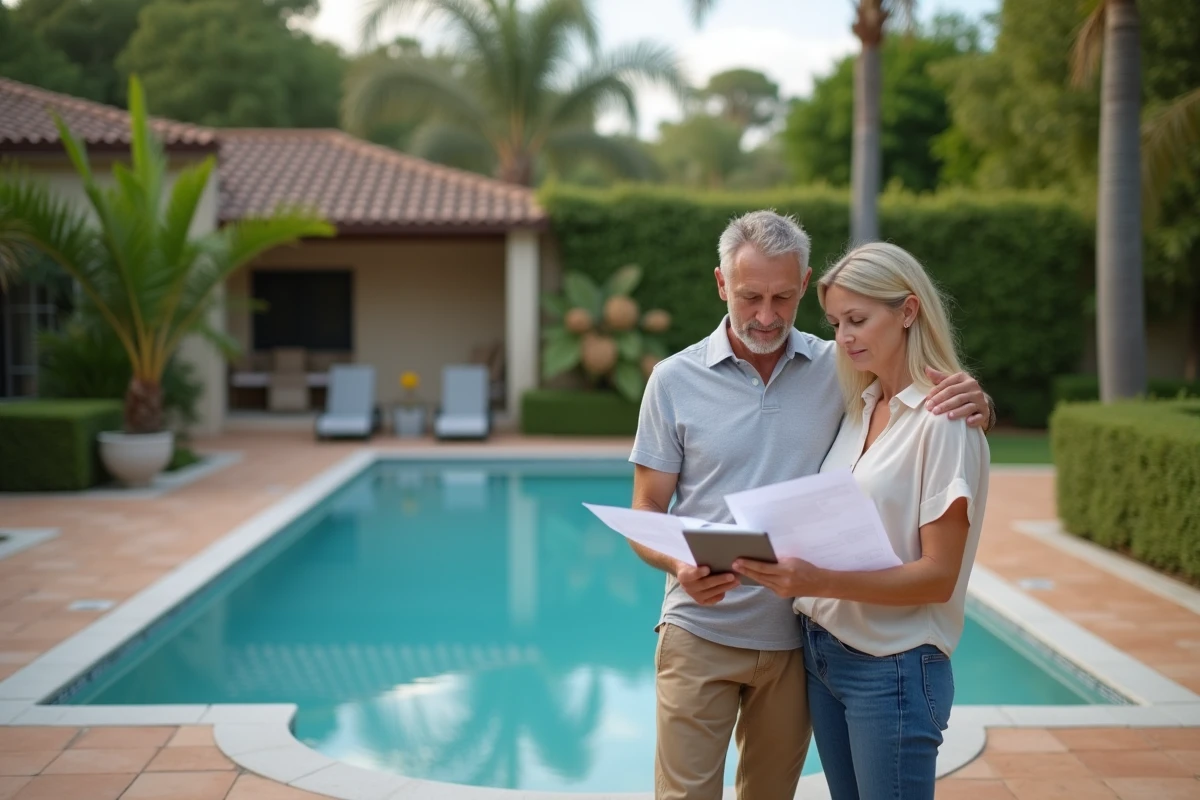
An in-ground pool modifies the rental value of your property as soon as the work is completed. This revaluation impacts the property tax each year, but the calculation mechanism remains opaque for most owners, including those who already understand the general framework of real estate taxation.
Flat rate and development tax: the item that owners underestimate
The development tax is a one-time payment, due after the issuance of the urban planning permit. For pools, the calculation is based on a national flat rate set at 262 euros per square meter of pool in 2023, revised annually by decree. This amount serves as the basis before applying the municipal and departmental rates.
In practice, for a pool of average size, the municipal rate (often between 1% and 5%, sometimes higher in tight areas) and the departmental rate accumulate. The result varies significantly from one municipality to another, which explains the considerable discrepancies observed between two identical projects located just a few kilometers apart.
We recommend consulting your municipality’s rate schedule before submitting the preliminary declaration. The final amount of the development tax can represent several hundred euros, or even exceed a thousand euros for larger pools or in municipalities applying a higher rate. Payment is made in one or two installments depending on the amount, in the months following the issuance of the permit.
The tax framework related to property taxes related to a pool therefore goes beyond just the annual property tax, and it is precisely the development tax that burdens the budget in the first year.

AI detection: the real risk of an undeclared pool
Since 2022, the DGFiP has been rolling out the “Innovative Land” project, developed with Google and Capgemini. This system analyzes aerial photographs using artificial intelligence to automatically detect pools missing from the land registry. Initially tested in several pilot departments, it has been gradually extended to the entire territory starting in 2024.
The consequences of an undeclared pool are not limited to amicable regularization. The administration recalculates the property tax retroactively, and the development tax remains due even if the declaration deadline is exceeded. Late penalties are added to the principal amount.
This tightening of control changes the game for owners who were considering delaying their declaration or installing a “discreet” pool. Satellite imagery makes concealment nearly impossible in the medium term, regardless of the size of the pool.
Annual property tax: what is included in the calculation and what is not
The construction of a masonry, in-ground, or semi-in-ground pool increases the rental value of the property. This value serves as the basis for calculating the property tax on built properties. The amount of the annual increase depends on the size of the pool, the municipality, and the rate voted by the local authority.
A technical point often overlooked: a temporary exemption of two years may apply provided that the property declaration (form 6704 IL) is submitted within 90 days of the completion of the work. After this deadline, the exemption is lost. We observe that many owners discover this obligation too late, after receiving the first notice of increased taxation.
Above-ground pools: the tax threshold
An above-ground pool, placed on the ground without a foundation or permanent anchoring, does not fall within the scope of the property tax. It also escapes the development tax. The criteria are precise:
- The pool must not require masonry work, earthmoving, or a fixed connection to the network
- It must be movable or dismantlable without damaging the ground or the pool itself
- Its installation duration must not exceed a few months per year (tubular pools left in place all year are in a gray area)
Beyond these criteria, any pool permanently fixed to the ground is considered a construction and falls within the tax scope.
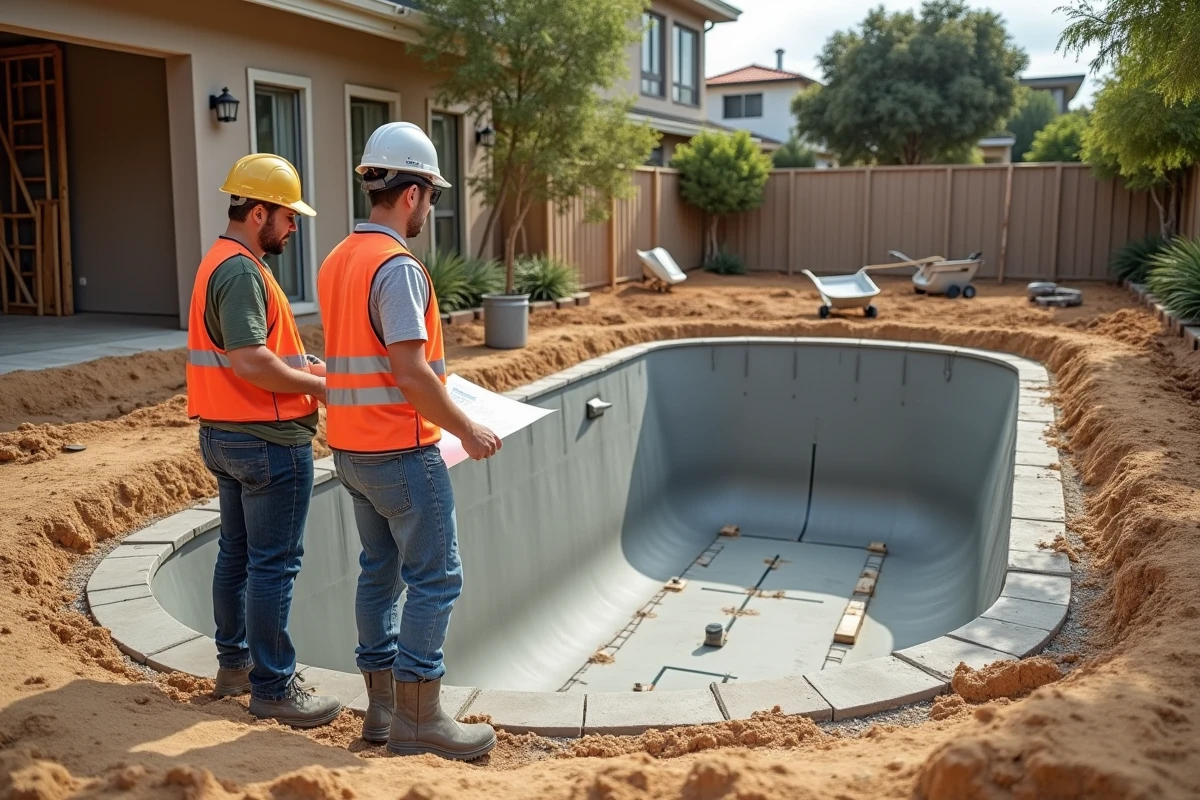
Total budget for the first year: anticipating the accumulation of tax costs
The classic trap is to budget only for the construction cost of the pool, without integrating the cumulative tax for the first year. Here are the items to anticipate:
- The development tax, calculated on the surface area of the pool with the applicable flat rate, payable in one or two installments
- The increased property tax (unless the two-year exemption is obtained within the deadlines)
- Additional costs related to the preliminary declaration of work or the building permit if the surface exceeds the regulatory threshold
For an average-sized pool, the cumulative tax cost in the first year can reach several hundred euros, then stabilizes in the following years at the level of just the annual property tax. This recurring additional cost, even modest, adds each year to the maintenance budget of the pool.
One last point we regularly observe: the resale of the property includes the pool in the estimation of the rental value. The buyer thus inherits the increased property tax, which can weigh on the negotiation of the sale price if the annual amount is significant. It is better to have all the declaration documents to secure the transaction.