
Magnesium pools are often talked about as a miracle basin, gentle on the skin and free from chemicals. The reality on the ground is more nuanced: it is an electrolysis system that uses a blend of salts enriched with magnesium, not just a simple addition of minerals to the water. Understanding this operation changes the way we choose, install, and maintain this type of pool.
Magnesium Electrolysis: What Really Happens in the Hydraulic Circuit
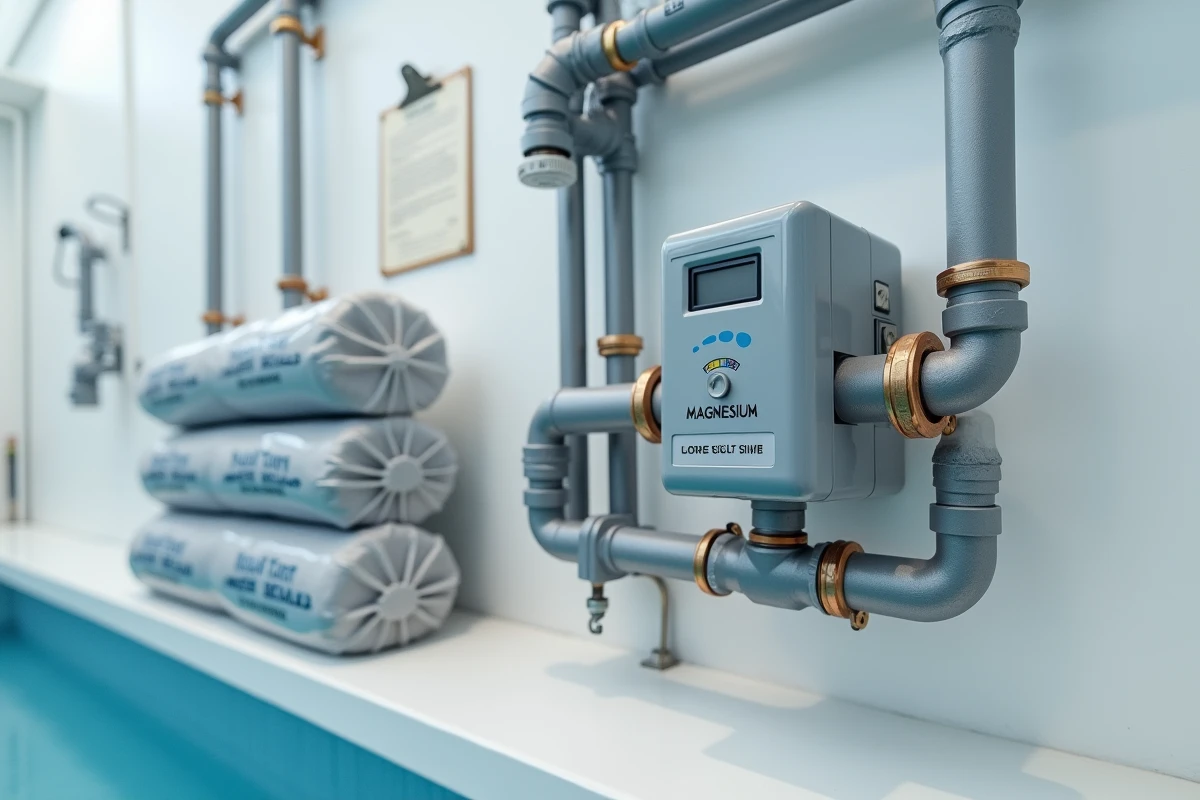
The term “magnesium pool” is a marketing shortcut. Specifically, an electrolyzer is installed (the most well-known system is Zodiac’s MagnaPool, paired with an Hydroxinator) and a mixture of sodium chloride and magnesium chloride is poured into the pool. The electrolyzer transforms these salts into active disinfectant, just like a traditional saltwater pool.
The difference lies in the composition of the salt used and the associated filtering medium (recycled glass instead of sand). Magnesium does not replace disinfection; it complements electrolysis. Water passes through the cell, producing free chlorine, while magnesium remains dissolved in the pool, which alters the softness felt to the touch.
To get an accurate idea of the cost of a magnesium pool, one must therefore include the electrolyzer, the specific filtering medium, and the enriched salt refills, not just the cost of the pool itself.
Equipment Compatibility and Corrosion: The Point No One Details
When switching to electrolysis treatment (salt or magnesium), the question of corrosion arises immediately. Electrolysis cells have a limited lifespan and must be cleaned regularly to avoid scaling. This is the same constraint as with a pure salt electrolyzer.

On the ground, feedback varies on this point: some users report less limescale buildup thanks to magnesium, while others note comparable wear on the electrodes. What is certain is that the metal parts of the pool (ladder, screws, pump) remain exposed to salt corrosion. Choosing 316L stainless steel or resin fittings is not a luxury; it is a necessity.
Before investing, check the compatibility of your pool robot with salt treatment. Some models are not designed to operate in salt-rich water, and manufacturers sometimes exclude the warranty in this case.
Points to Check Before Installation
- The electrolysis cell must be sized for the exact volume of the pool; otherwise, the disinfectant level will be insufficient or excessive
- The recycled glass filtering medium replaces the sand in the existing filter, but the filter diameter must be adapted to the pump flow rate
- The coping, liner, and seals must withstand a dissolved salt level equivalent to that of a traditional saltwater pool
- pH regulation remains mandatory: electrolysis raises the pH, necessitating an automatic corrector or frequent manual additions
Swimming Comfort: Magnesium vs. Chlorine or Salt Pools
Magnesium dissolved in water produces a softness that many swimmers compare to that of thermal water. Eye irritation and skin dryness significantly decrease compared to treatment with chlorine tablets.
Compared to a salt pool without magnesium, the difference is more subtle. The water is slightly silkier, and the chlorine smell is reduced in both cases since the disinfectant is generated by electrolysis. The real gain lies in the feel and post-swim experience: less skin tightness, less dry hair.
However, magnesium does not exempt one from regular pool maintenance. It is necessary to monitor the salt level, pH, water temperature, and the condition of the cell. Maintenance remains comparable to that of a salt electrolysis system, with a minimum weekly check during peak season.
Real Budget and Expense Items for a Magnesium Pool
The initial cost is higher than for chlorine or bromine treatment. The magnesium-compatible electrolyzer represents the main expense. One must also add the recycled glass filtering medium (more expensive than sand, but with a longer lifespan) and the magnesium-enriched salt, sold in specific bags.
Over time, savings come from the reduction of chemicals purchased each season. You no longer buy chlorine tablets, shock chlorine, or algae preventatives in quantity. The salt is partially renewed each year, depending on water loss (splashing, partial drain, winterization).
What Weighs in the Balance Long-Term
- The replacement of the electrolysis cell occurs after several seasons of use, and its cost is not negligible
- The recycled glass filtering medium is changed less often than sand, which partially offsets its purchase price
- The electricity consumption of the electrolyzer adds to that of the filtration pump but remains moderate
The initial extra cost is particularly justified for pools used intensively, where swimming comfort and reduced chemical handling matter daily. For a pool open only a few weeks a year, the return on investment will be longer.
Magnesium treatment remains an electrolysis system with its maintenance constraints, material compatibility, and budget. The softness of the water is real, and the comfort gain is too. But this system is not chosen to eliminate maintenance: it is chosen to change the nature of that maintenance and improve the quality of each swim.