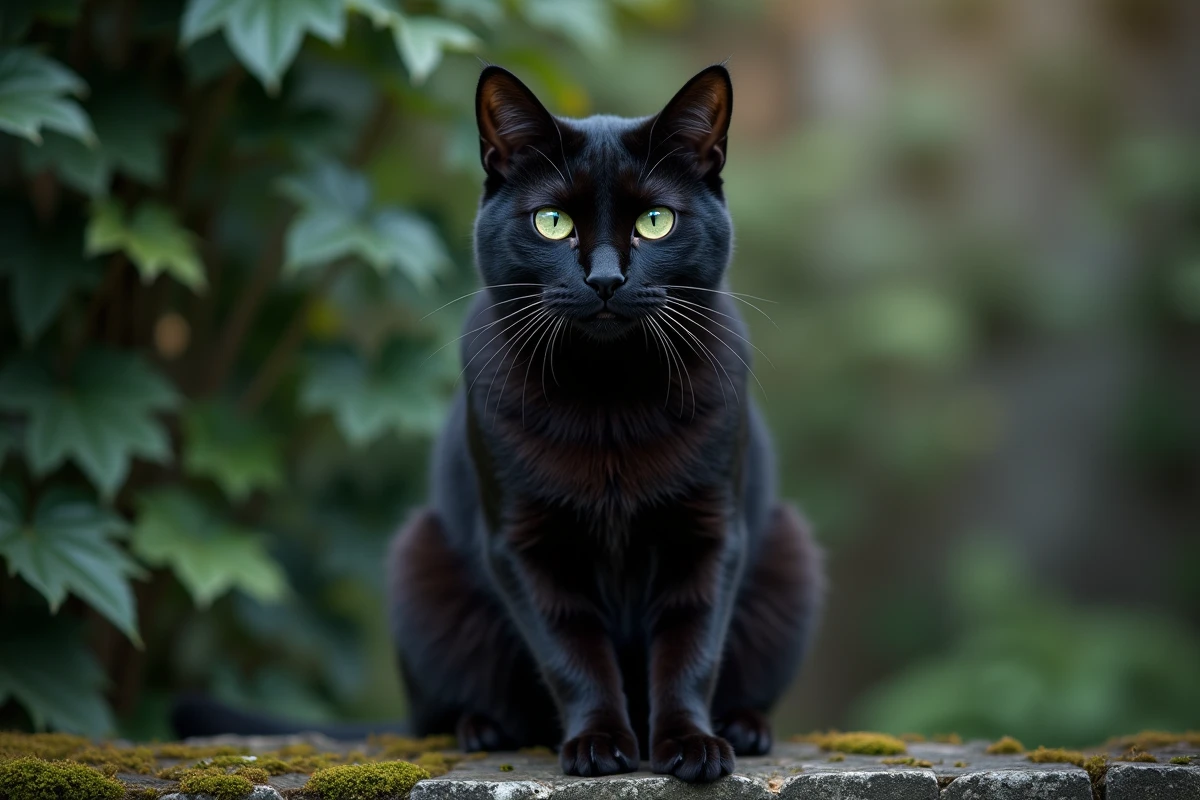
An inky coat, two irises of a bright green: this combination has attracted attention and fueled fantasies for centuries. The black cat with green eyes embodies a legacy of contradictory beliefs, straddling the line between supposed curse and symbol of luck. Behind the fascination lies a genetic reality that legends almost always obscure.
Genetics of the black cat with green eyes: why this combination is rare
You may have noticed that not all black cats have green eyes? Many display copper or golden irises. The Bombay, for example, is a completely black cat whose eyes are typically copper, never green.
The color of the iris depends on the amount and distribution of melanin in the iris, a mechanism distinct from that which colors the coat. A black cat with green eyes results from a specific genetic combination, where the coat produces a lot of eumelanin (black pigment) while the iris contains a moderate amount of melanin, enough to filter light and produce a green reflection.
This combination appears more often in alley cats or breeds with solid and smoky coats (black, blue, chocolate). It is nothing supernatural, but it remains uncommon compared to golden or orange irises, which fuels the perception of rarity and mystery.
To better understand the black cat with green eyes and their significance, one must start with this biological foundation before diving into symbolism.
Superstitions and beliefs: the black cat between curse and luck
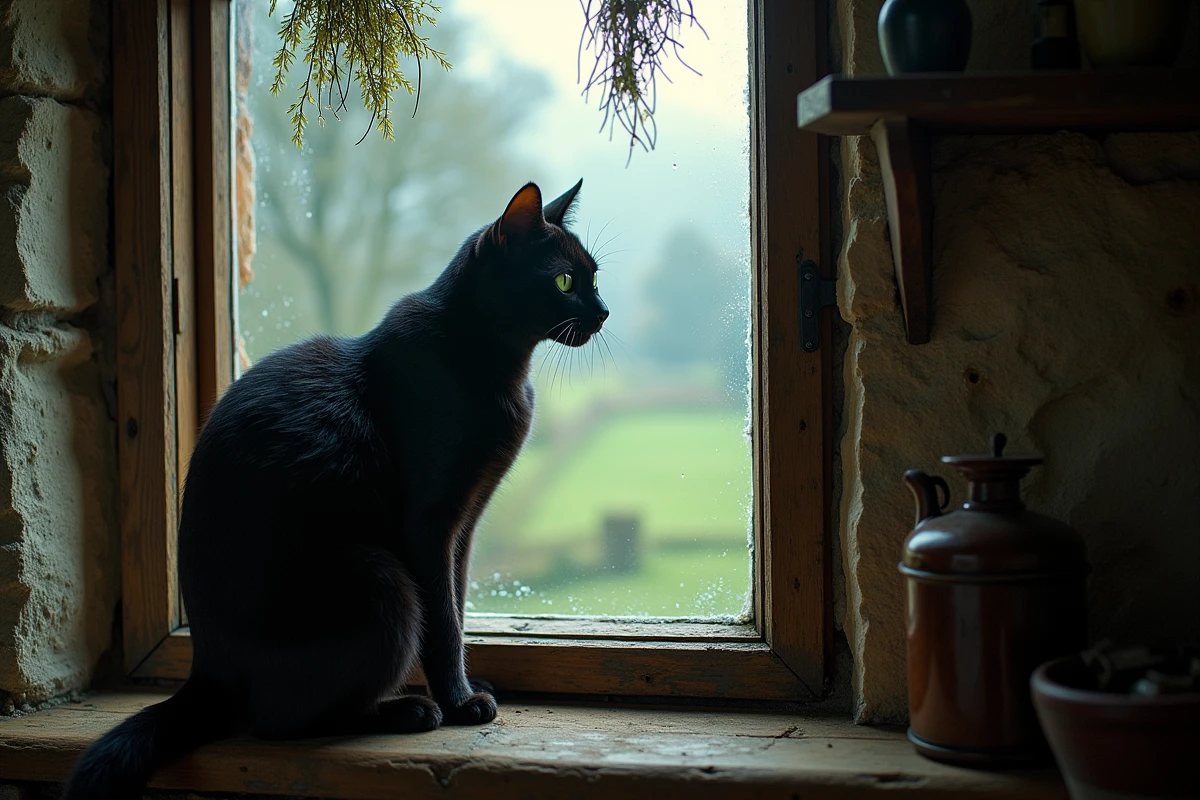
The black cat has carried a sultry reputation in Western Europe since the Middle Ages. Associated with witches, it was seen as a companion of the devil. The Salem trials in the United States reinforced this link between black felines and witchcraft in the collective imagination.
But this view is far from universal. In several cultures, the black cat represents exactly the opposite:
- In Japan, crossing paths with a black cat is a sign of good luck, and black cat figurines (maneki-neko) are placed in businesses to attract prosperity.
- In Scotland, a black cat appearing on the doorstep heralds fortune.
- In ancient Egypt, the cat (regardless of its color) was sacred, associated with the goddess Bastet, protector of the home and fertility.
Superstitions about black cats vary from country to country, sometimes from region to region within the same country. In France, popular belief holds that a black cat crossing the road brings bad luck, while in other French regions, the opposite is considered.
What is striking is that green eyes add an extra layer to these beliefs. Green, a color associated with nature and renewal, enhances the image of an animal “connected” to invisible forces. Green eyes transform the black cat into a symbol of intuition and clairvoyance in many esoteric traditions.
Symbolism of the black cat with green eyes in art and culture
The black cat did not wait for Instagram to fascinate artists. In the late 19th century in Paris, the famous cabaret Le Chat Noir adopted the image of a black feline as an emblem of artistic bohemia. The poster by Théophile-Alexandre Steinlen, featuring his black cat with piercing eyes, became an icon of graphic design.
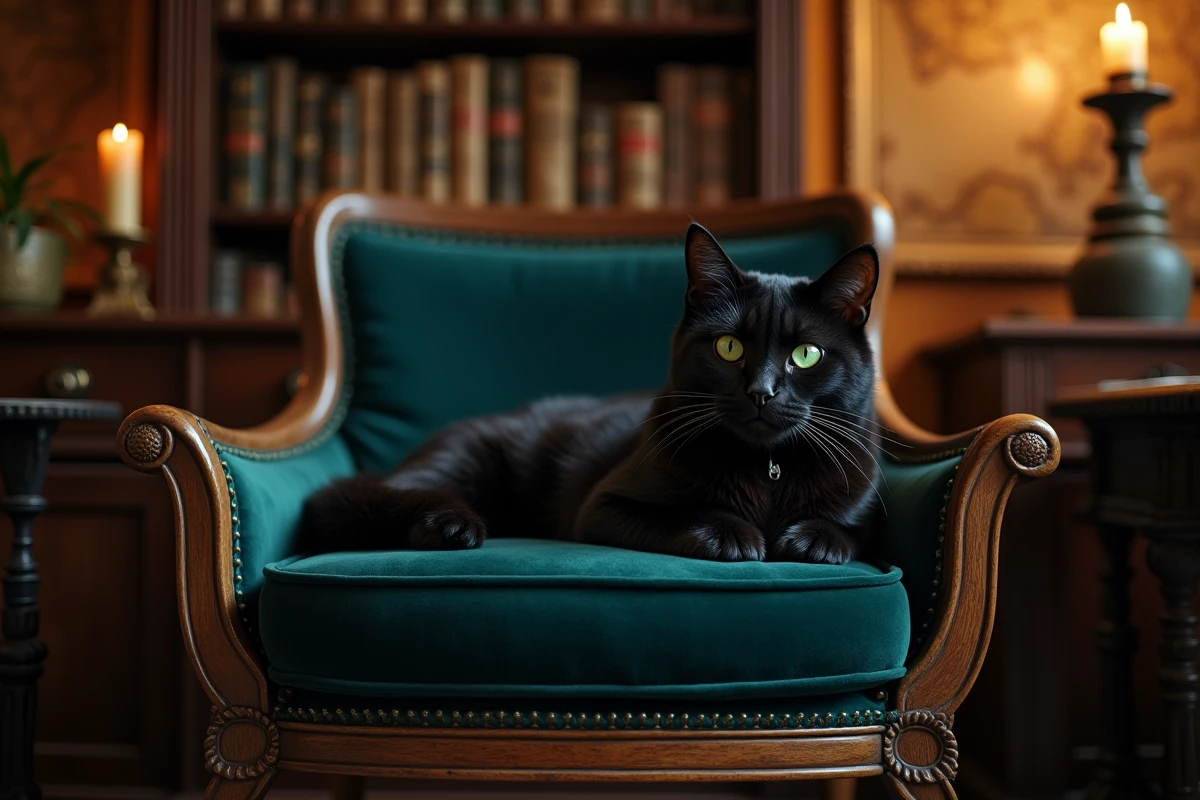
In literature, Edgar Allan Poe anchored the black cat in the realm of psychological horror. Its dark coat and fixed gaze embody guilt and the return of the repressed. The black cat serves as a mirror of human obsessions, much more than just an animal.
In contemporary marketing, the image of the black cat with green eyes has become a visual code for luxury, mystery, and elegance. Fashion, perfume, and home decor brands use this silhouette to evoke sophistication without uttering a word. The contrast between the deep black of the coat and the bright green of the eyes creates a visual impact that social media algorithms naturally favor.
Adoption and photogenicity: the bias against black cats in shelters
Despite this cultural aura, black cats remain among the animals that spend the most time in shelters before being adopted. This phenomenon, documented by animal protection associations, has a name: black cat syndrome.
The reason is partly technical. Black cats do not photograph well, especially in artificial light. Their features blend into their fur, and advertisement photos do not capture their expression. The result: they receive fewer clicks on adoption sites and social media.
Black cats with green eyes receive different treatment. The eye/coat contrast makes them more photogenic, more noticeable in a stream of images. On TikTok or Instagram, these felines generate more engagement than black cats with dark eyes.
- A black cat with green eyes stands out immediately in an online adoption gallery.
- The natural contrast of its colors draws attention without photo editing.
- Adopting a black cat, regardless of the color of its eyes, remains a helpful gesture in light of the overrepresentation of these animals in shelters.
This photographic bias has real consequences on the length of stay in shelters. If you are considering adopting a feline, knowing that black cats are often the last chosen can guide your decision towards an equally affectionate animal, simply less visible on a screen.
The black cat with green eyes condenses centuries of symbolism, a particular genetics, and a modern paradox related to digital photogenicity. Its relative rarity and visual impact make it a unique animal, both in shelters and in the collective imagination.