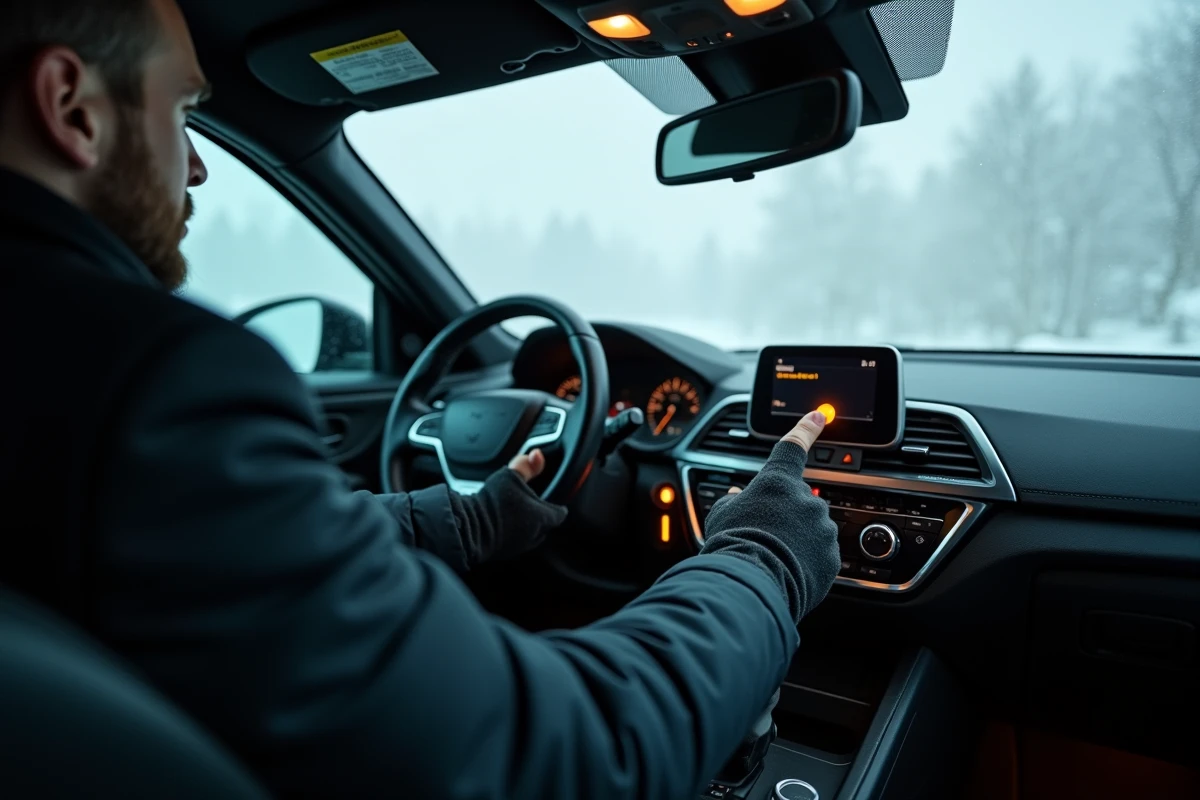
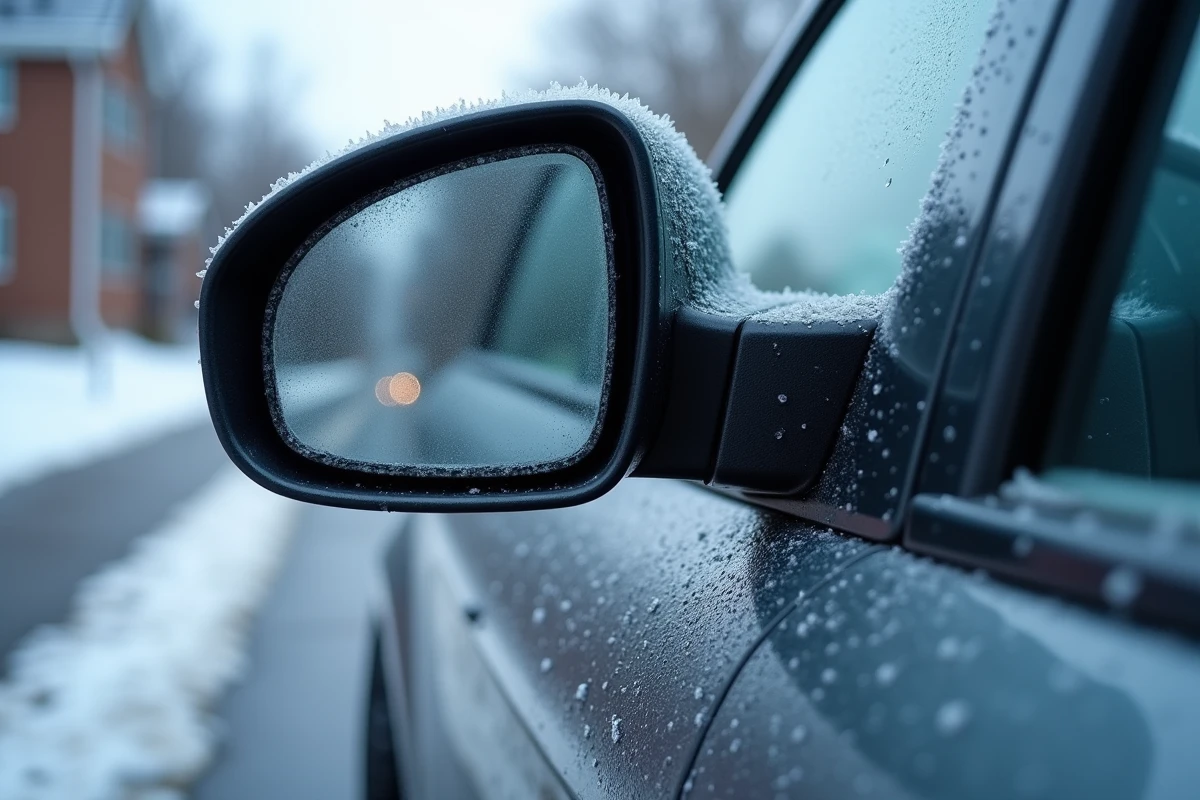
The defrosting of mirrors remains a poorly understood function on most vehicles. Many drivers are unaware that their mirrors are equipped with heating elements, or they confuse its activation with that of the rear window. However, lateral visibility in winter directly depends on this system, and diagnostic or usage errors are common, even on recent models.
Heating Elements of Mirrors: Often Coupled Circuits, Sometimes Autonomous
On the majority of passenger cars, the heating of the exterior mirrors shares the same circuit as the heated rear window. Pressing the rear defrost button simultaneously activates the heating elements integrated into the side mirrors. This coupled operation is the norm for Volkswagen, Renault, Peugeot, and Hyundai.
In contrast, on some premium or electric models, the defrosting of the mirrors has a separate control, sometimes accessible only via the central climate control screen. Volvo, for example, offers three distinct levels on the XC90: maximum defrosting, heated windshield, and rear window with mirrors. The driver must select the correct function in the climate menu to activate the mirror heating.
This lack of uniformity among manufacturers explains why so many drivers operate with frosted mirrors unknowingly. To activate the mirror defrosting on your vehicle, the first step is to consult the user manual, as the physical button and software menu vary from model to model.
Electric and Plug-in Hybrid Vehicles: Defrosting Slowed by Battery Management
Electric and plug-in hybrid vehicles manage energy differently than conventional vehicles. The defrosting of the mirrors takes precedence after the high-voltage battery in the hierarchy of electrical distribution. On premium plug-in hybrids, the system prioritizes powering the powertrain and cabin heating before sending current to the 12V heating elements of the mirrors.
The concrete result: a slower activation of the defrosting compared to a conventional thermal vehicle. In moderate freezing weather, the difference remains negligible. During episodes of thick frost or very low temperatures, the delay becomes noticeable, and lateral visibility takes longer to restore.
Regulatory Delay on New Electric Models
The extension of Regulation (EU) 2019/2144 requires that, starting January 2026, new series electric vehicles equip heated mirrors with a limited automatic delay of a maximum of ten minutes. The goal is to reduce energy consumption related to defrosting, a factor sometimes underestimated in winter conditions.
This regulatory constraint means that on the latest models, the heating of the mirrors automatically turns off. If the frost has not completely disappeared, the function must be manually restarted. Drivers accustomed to leaving the defrosting on for an entire morning trip will need to adjust their habits.
Defrosting Failures in Delivery Fleets: A Warning Signal for All Drivers
Urban electric delivery fleets have experienced a significant increase in defrosting failures on mirrors during the winter of 2025-2026. The accelerated wear of the heating elements in wet and cold conditions is identified as the main cause.
This observation is not limited to professionals. The heating elements of mirrors are thin components, often glued to the back of the mirror. Their lifespan directly depends on activation cycles and exposure to moisture.
- A mirror whose defrosting no longer works on one side often signals a burnt-out element, not a fuse
- Diagnosis is done with a multimeter by measuring the continuity of the circuit on the connector of the removed mirror
- On utility vehicles like the Fiat Talento or Nissan NV400, it is possible to replace just the heating element without changing the entire mirror housing
Checking the proper functioning of the defrosting before each winter, by activating the function and placing a hand on the mirror after a few minutes, remains the simplest and most reliable test.
Motorhomes and Aftermarket Mirror Extensions: The Original Circuit Tested
A common use case involves motorhomes equipped with aftermarket mirror extensions. These mirror extensions, fixed by a bracket or suction cup on the original mirror, are essential for lateral visibility with a wide vehicle or trailer.
The problem is twofold. First, the mirror extension partially covers the original heating surface, reducing the effectiveness of defrosting in the useful area. Second, some aftermarket extensions offer their own 12V heating element, but connecting to the vehicle’s circuit can create an overload on the fuse shared with the rear window.
Wiring Precautions for Mobile Installations
On a motorhome where a heated wide-angle mirror is added in addition to the original mirror, the wiring deserves special attention:
- Run a dedicated power supply from the auxiliary battery (cell) rather than tapping into the mirror circuit of the chassis
- Install a relay controlled by the original defrost button to synchronize the two systems without overloading the circuit
- Protect the additional circuit with a fuse rated according to the power of the aftermarket heating element
- Ensure that the ground is taken from a clean point on the chassis, not from the vehicle’s body
Some users of converted Fiat Ducato or Mercedes Sprinter report reliable operation with a simple parallel connection, while others experience intermittent cut-offs of the original defrosting after adding the extension. A dedicated circuit with a relay remains the safest solution to preserve the defrosting function on both mirrors.
Optical Sensors and Automatic Defrosting: Frost Detection Arrives on Utility Vehicles
Since 2025, level 2 and higher ADAS systems integrated into light commercial vehicles have begun to include automatic defrost activation through frost detection via optical sensors. The system analyzes the surface of the mirror and triggers heating without driver intervention.
This technology eliminates the risk of forgetting, but it is not yet widespread in entry-level passenger vehicles. The available data does not allow for conclusions about the long-term reliability of these sensors in very salty or dusty environments. For the vast majority of drivers, the manual reflex to activate defrosting at startup in cold weather remains the most reliable method to ensure good lateral visibility throughout the winter.