A curtain labeled “blackout” does not necessarily block all light. The term refers to a fabric designed to prevent light from passing through, but the actual degree of blackout varies depending on the textile composition, the number of layers, and the quality of the installation. Checking the effectiveness of a blackout curtain in your home requires considering several measurable technical criteria, not just relying on the label on the packaging.
Blackout rate of the curtain: what the technical sheet reveals
Not all blackout curtains are created equal. A fabric advertised as 80% blackout still allows a noticeable amount of light to pass through, enough to distinguish the outlines of a room in broad daylight. A model at 100% plunges the room into complete darkness, even with the shutters open.
The blackout rate is the first reliable indicator. Some manufacturers mention it on the product sheet, while others do not. If this information is absent, the risk of disappointment increases. Before making a purchase or to evaluate a curtain already installed, you can read Direct Maison’s advice on concrete verification methods.
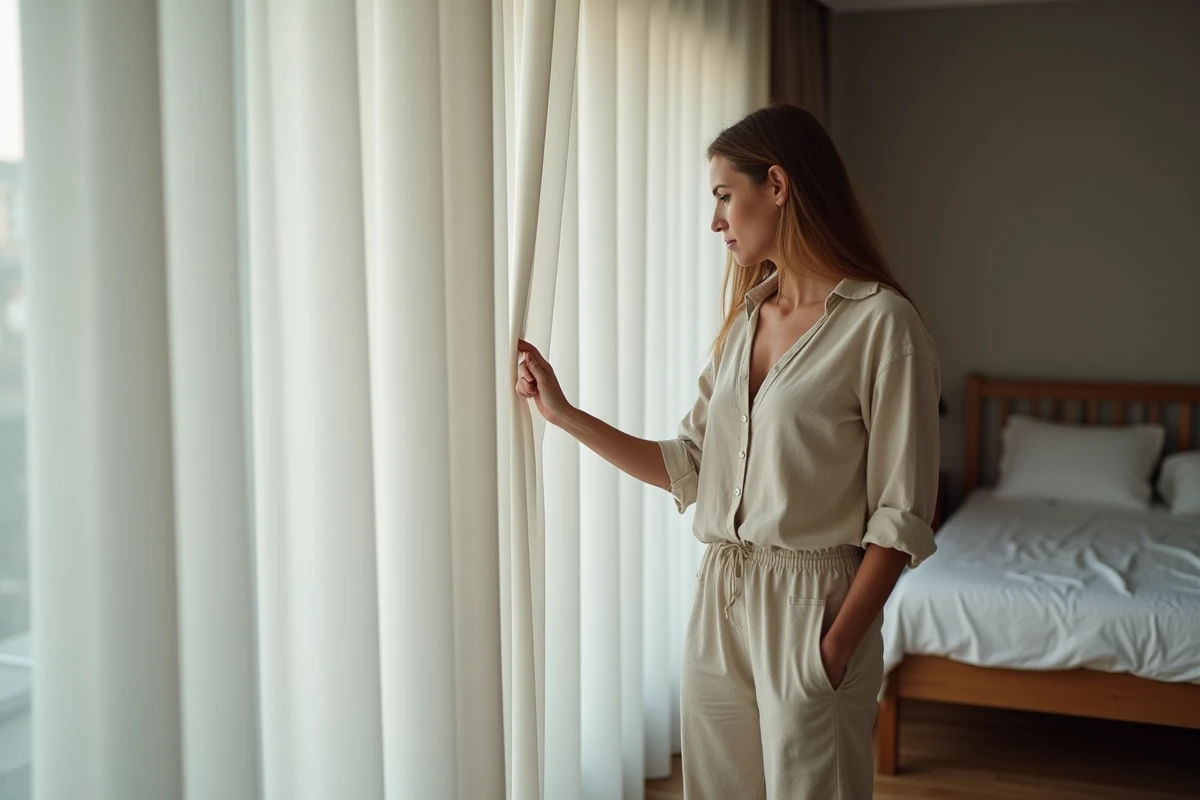
A simple test to perform at home: during the day, close the curtain and turn off all artificial light sources. If a light halo persists around the edges or if the fabric itself lets in some brightness, the blackout is incomplete. A truly effective curtain makes the room dark without the help of shutters.
Number of layers and composition of blackout fabric
The internal structure of the curtain determines its ability to block light as well as heat. A basic blackout fabric often consists of two layers: a decorative face and an opaque lining. More technical models have three or more layers, with an intermediate layer designed to absorb or reflect rays.
What each layer brings
- The outer layer (window side) protects against UV rays and, on some models, reflects heat thanks to an aluminized treatment
- The intermediate layer, often made of acrylic foam or dense polyester, ensures the actual light blocking
- The inner face (room side) provides aesthetic appeal and can contribute to sound insulation
A single thick layer curtain is not a true blackout. Thickness alone is not enough: a heavy velvet, for example, reduces light without eliminating it. The presence of a dedicated blackout lining makes all the difference.
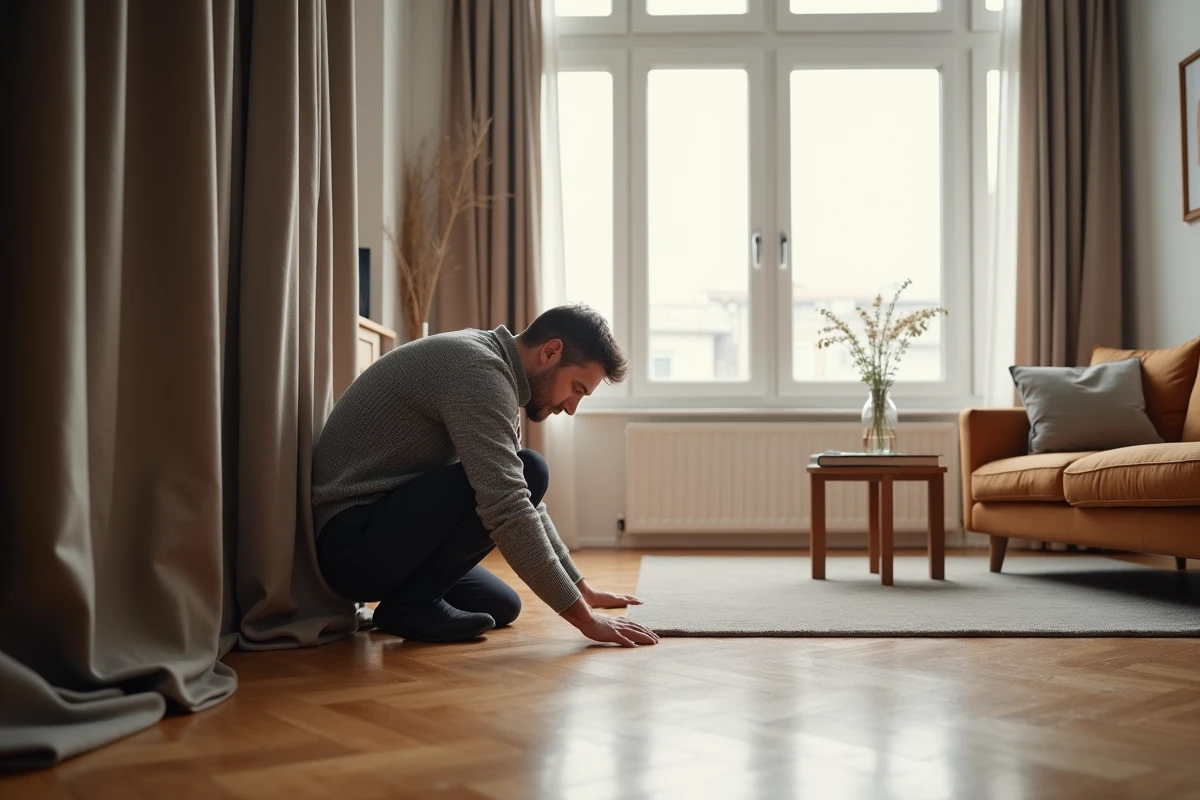
To check, turn the curtain inside out and observe the back. A distinct lining, often a different color (gray, black, or silver), indicates a real blackout treatment. If the back is identical to the front, the fabric relies on its natural opacity, which is insufficient for a room exposed to morning sunlight.
Blackout curtain and thermal curtain: two distinct functions
A blackout curtain cuts off light. A thermal curtain limits heat exchange between the window and the room. These two properties do not automatically go hand in hand.
A standard blackout, even effective against light, may allow winter cold or summer overheating to pass through if its composition does not include a thermal barrier. Conversely, most quality thermal curtains are also blackout, as the layers necessary for insulation mechanically block light. The most efficient models stack up to nine layers.
How to distinguish between the two when purchasing or at home
Place your hand between the closed curtain and the glass on a hot day. If the perceived temperature is significantly higher on the glass side than on the room side, the curtain offers some thermal insulation. If the heat passes through without notable attenuation, the fabric blocks light but not heat.
On product sheets, look for the explicit mention of “thermal” or “insulating” in addition to “blackout.” A curtain that only mentions blackout does not guarantee anything in terms of insulation.
Sizing and installation: the mistakes that ruin blackout
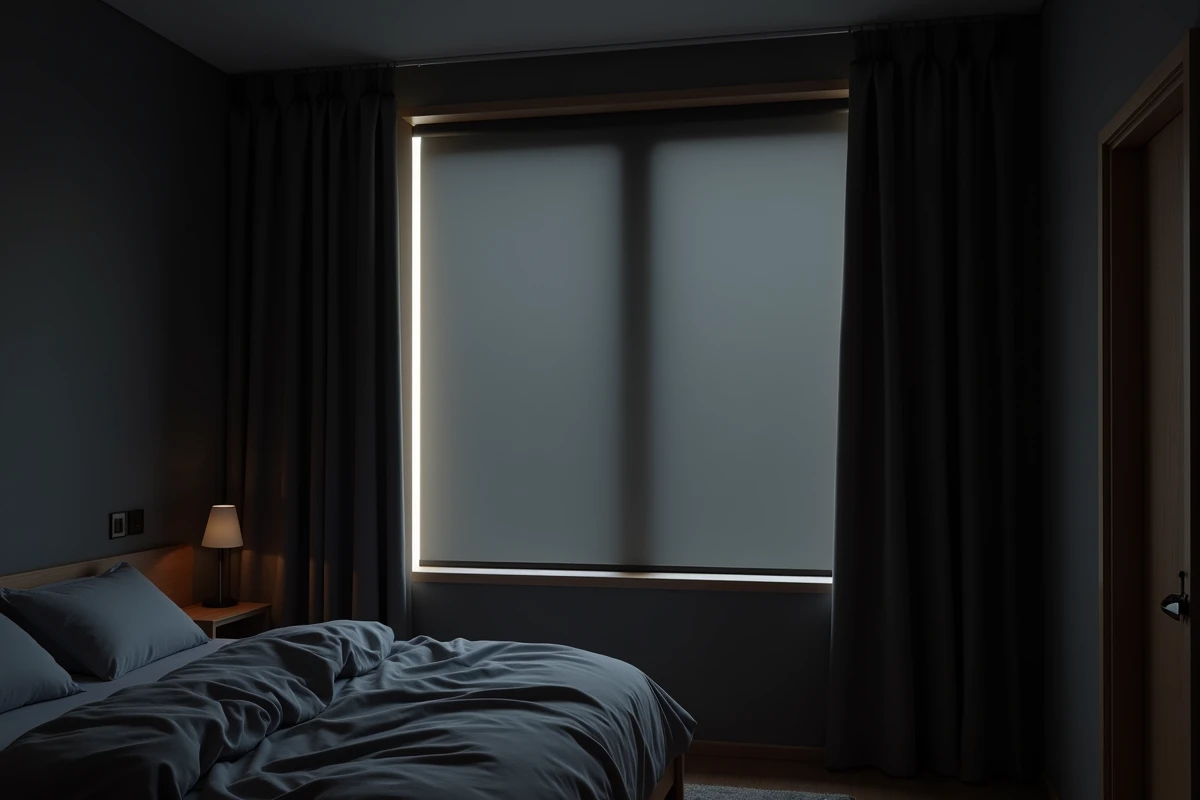
A perfectly opaque curtain loses all its effectiveness if it is poorly sized. Light leaks rarely come from the fabric itself. They pass through the sides, the top, and the bottom of the curtain.
- The curtain should extend at least fifteen centimeters beyond the window on each side to prevent side leaks
- The rod should be placed high enough above the frame so that the fabric covers the entire opening, including the shutter box if necessary
- At the bottom, the curtain should just touch the floor or rest slightly on it, without leaving a gap of several centimeters
- A fixing system with eyelets or a ceiling rail holds the fabric better against the wall than a simple rod placed on narrow supports
A curtain that is too short or too narrow lets in as much light as a semi-blackout model. The quality of the fabric never compensates for a poor installation. Measuring the window is not enough: you must measure the area to be covered, including necessary margins.
Quick installation check
Close the curtain in broad daylight and observe the edges. Any visible line of light on the edges or at the bottom indicates a coverage defect. Correct the installation first before questioning the fabric.
The choice of a blackout curtain hinges on three verifiable points: a documented blackout rate, a multi-layer structure with a dedicated lining, and an installation that eliminates side and vertical leaks. A well-installed high-performance fabric protects less than a medium model perfectly adjusted to the window.