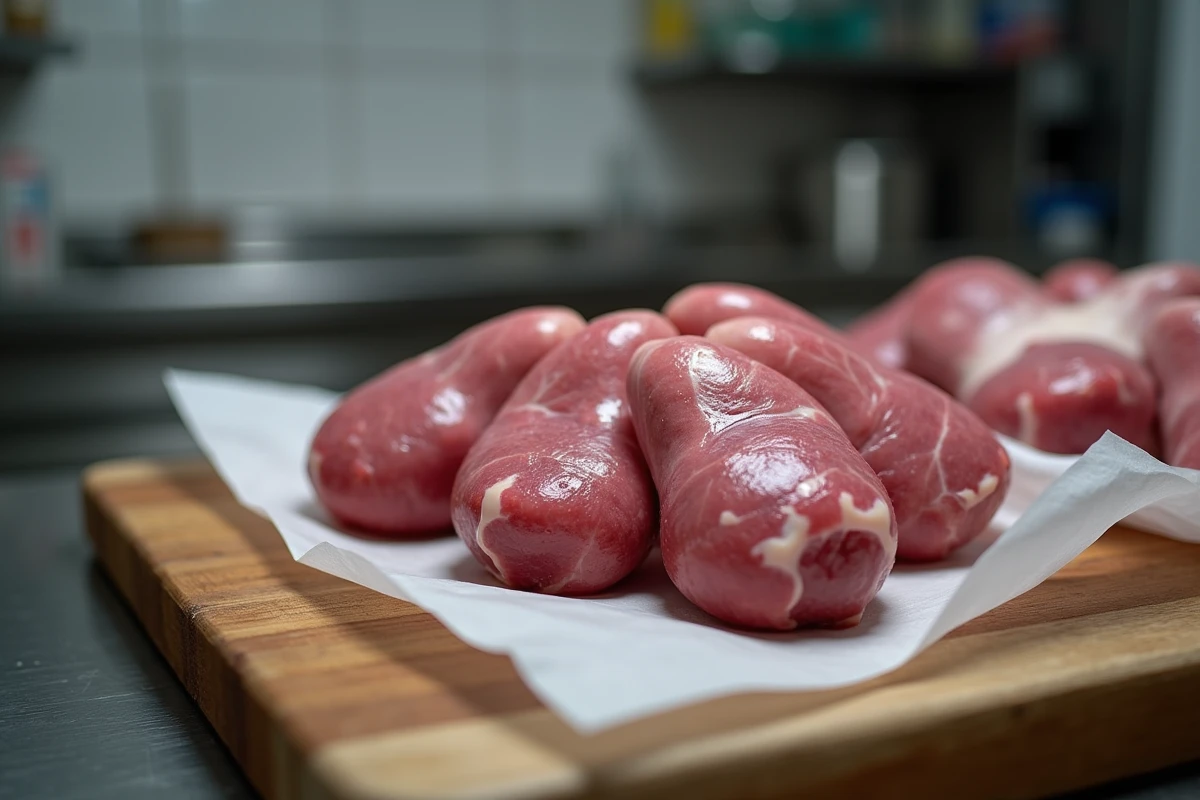
When you pick up fresh offal from the butcher or after slaughter, the question of storage arises quickly. Sheep testicles are a delicate offal, much more sensitive to oxidation and rancidity than a typical muscle cut. Properly freezing them allows you to keep them for several weeks without losing their texture or compromising food safety, provided you follow a few specific rules.
Freshness of sheep testicles before freezing: what happens before the freezer
You don’t freeze questionable offal hoping that the cold will solve the problem. Freezing freezes the state of the product without making it safe. If the sheep testicle already shows signs of deterioration, putting it in the freezer will only pause this degradation, not erase it.
Before wrapping anything, check three points. The surface should not be sticky. The smell should remain neutral, without any sour notes. The color should be uniform, without grayish or greenish areas.
Fresh offal has a firm texture under your finger. If the flesh sinks without resistance, it’s a sign that the piece has already waited too long. Opinions vary on the exact duration of refrigeration before freezing, but it’s best to freeze on the day of purchase or at the latest the next day. You can also find cooking tips on Matin Gourmand confirming the importance of acting quickly with this type of offal.
Wrapping sheep testicles for the freezer: vacuum sealing changes everything
The fat present in offal rancid more easily than that of a leg of lamb or a shoulder. Contact with air accelerates this phenomenon, even at negative temperatures. A simple classic freezer bag allows enough oxygen to pass through to alter the taste in just a few weeks.
Vacuum sealing or double wrapping
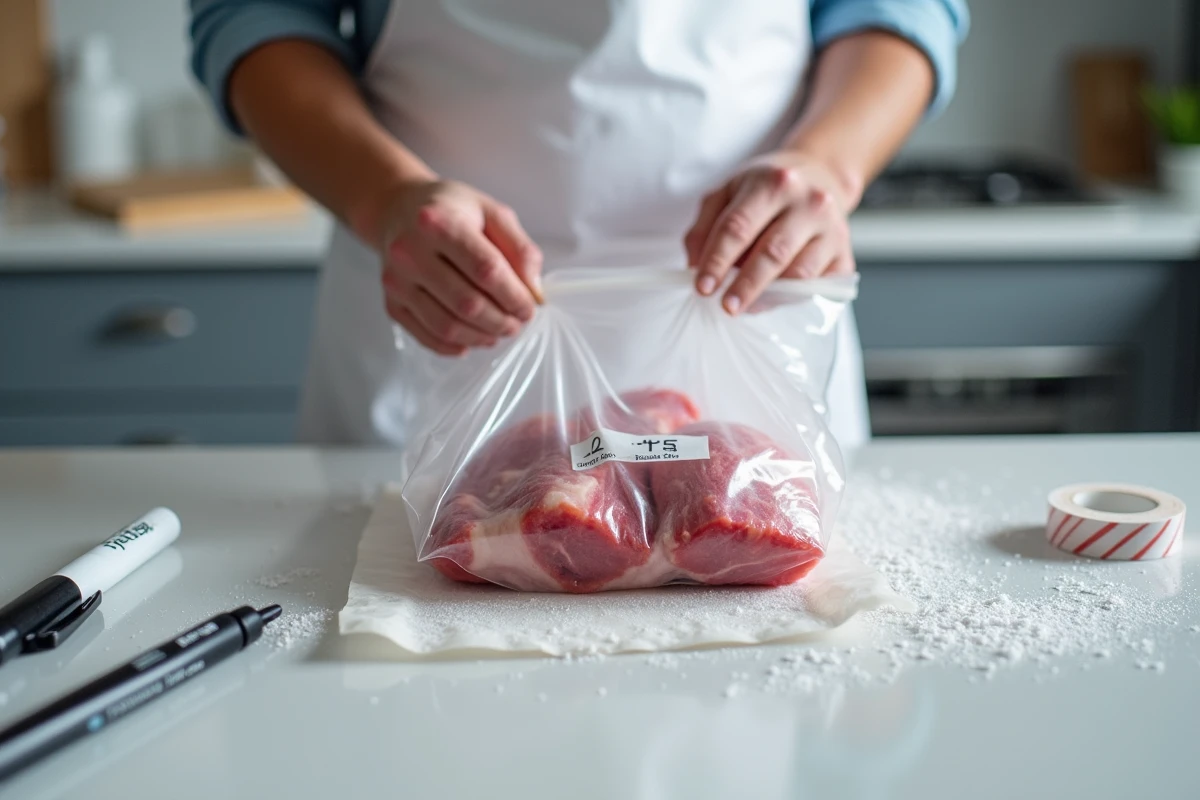
Vacuum sealing significantly reduces the rancidity of the fat. It is the most reliable method for preserving sheep testicles in the freezer for an extended period. If you don’t have a vacuum sealer, you can compensate with double wrapping: cling film in contact with the offal, then a freezer bag from which you remove as much air as possible before sealing.
- Place the cleaned and dried sheep testicle in the vacuum bag, avoiding folds that create air pockets
- Seal the bag or, if not possible, wrap the offal in two tightly secured layers of cling film before slipping it into a zip bag
- Label with the date of the day, as it’s easy to lose track once the product is frozen
- Portion if possible: defrosting a large block to use only half is wasteful and a health risk
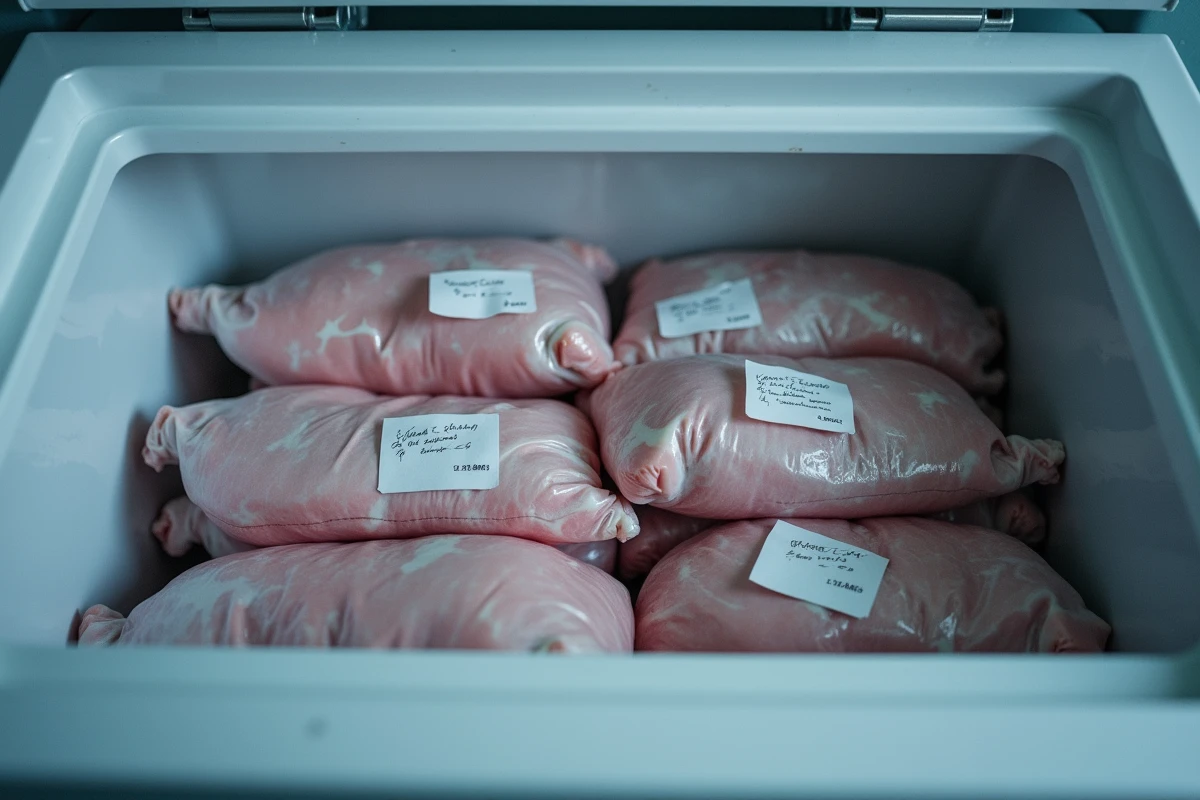
The goal is to minimize the surface exposed to air. Poorly done packaging can be identified after a few weeks when frost crystals appear on the meat, indicating that moisture has escaped.
Temperature and storage duration in the freezer
A freezer set too high does not freeze; it merely slows down degradation. For offal like sheep testicles, we need a rapid drop in temperature and stable maintenance.
Freezer setting before placing in
A few hours before freezing, lower the temperature of the freezer to speed up the chilling process. The faster the freezing, the smaller the ice crystals that form in the tissues, which preserves the texture upon defrosting. An overloaded freezer when placing fresh offal will raise the temperature, slowing down the process.
Offal does not keep as long as muscle meat. While a piece of beef or lamb can last for months without issue, a sheep testicle should be consumed more quickly to avoid a mealy texture and rancid taste. Vacuum sealing extends this window but does not eliminate it.
Defrosting sheep testicles without health risks
Defrosting is the moment when everything can go wrong. Offal left on the countertop spends too much time in the temperature zone favorable to bacteria, long before the center of the product is thawed.
Defrosting in the refrigerator remains the only truly safe method for this type of offal. Take the sheep testicle out of the freezer the night before, place it in a shallow dish to catch the juices, and let it defrost slowly in the cold. The necessary time depends on the size of the portion, but you should allow for a full night for a standard-sized piece.
What to avoid during defrosting
- Defrosting at room temperature: the surface quickly reaches a temperature conducive to bacterial growth while the center remains frozen
- Refreezing already defrosted offal: this rule applies to all meat, but it is even stricter for offal, whose microbial load evolves quickly
- Using the microwave on this type of product: partial cooking creates very uneven texture zones and does not guarantee a uniform temperature
Once defrosted, the sheep testicle should be cooked within hours. Do not leave it sitting in the refrigerator for another day.
Cooking after freezing: adapting the recipe to the texture
Frozen then defrosted offal always loses a bit of firmness compared to fresh product. For sheep testicles, this translates to slightly softer flesh. The cooking methods that work best after defrosting are those that bring contrast: a lively sauté with onions, a crispy breading, or a high-temperature oven roast.
Cutting the offal into thin slices before cooking allows for quick and even searing. Make sure to dry the surface well with paper towels before placing it in the hot pan, as the water from defrosting prevents the Maillard reaction and results in a boiled rather than golden outcome.
Freezing sheep testicles is not complicated, but it does not forgive approximation. Fresh offal, airtight packaging, a rapid drop in cold, and slow defrosting in the refrigerator form a simple protocol that protects both flavor and food safety.