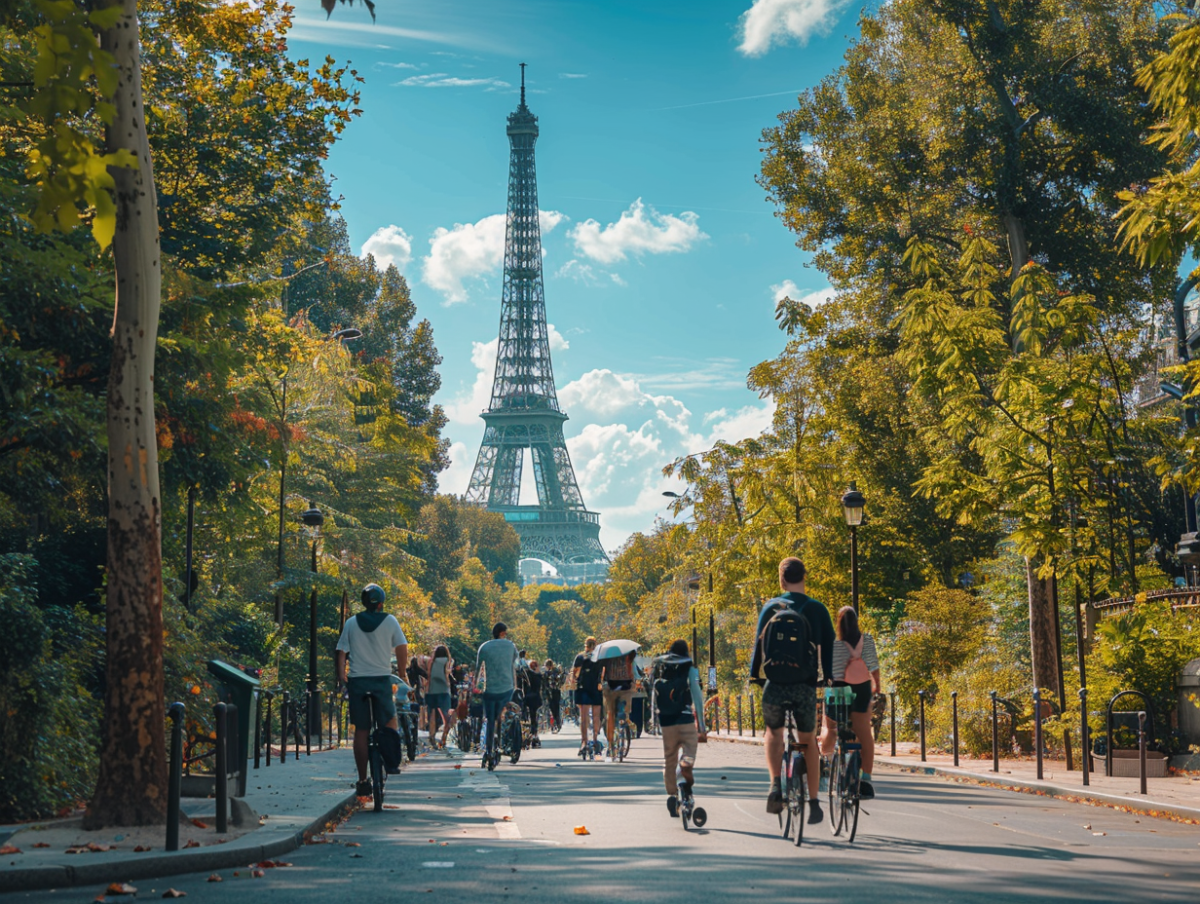
Paris, the City of Light and cradle of innovation, sees its streets transformed by new urban mobility trends. Residents, keen to adopt more eco-friendly modes of transport, are turning to solutions like bike-sharing, electric scooters, and carpooling.
The rise of pedestrian zones and bike lanes reflects a desire to reduce carbon footprints and make the city more pleasant to live in. Municipal initiatives, supported by dynamic start-ups, are changing the way Parisians move around, making the capital greener and more accessible to all.
Technological Innovations and Their Impact on Urban Mobility
Paris, resolutely looking towards the future, is witnessing the emergence of revolutionary technologies that redefine its urban mobility. The Internet of Things (IoT) and big data enable smoother traffic and public transport management. Smart sensors installed on roads and vehicles collect crucial information to optimize routes and reduce congestion.
Autonomous vehicles (AV) and electric vehicles (EV) also mark a turning point. The capital is experimenting with several pilot projects to integrate these new mobility solutions into its urban landscape. Mobility as a Service (MaaS) is becoming a reality with platforms like IntraParis nomade, which combine different modes of transport into a single application.
Micromobility Solutions
Micromobility is gaining traction with electric scooters and shared bikes. These solutions offer a quick and eco-friendly alternative to traditional transport modes. Moreover, Parisians are adopting these means for their daily commutes, thereby contributing to the reduction of CO2 emissions.
- IntraParis nomade: an app integrating various modes of transport.
- Vélib’ and Autolib’: self-service options for flexible travel.
The health crisis has accelerated the development of remote work and e-commerce, altering mobility flows. Dark stores, urban warehouses for rapid delivery, are multiplying, responding to new consumer expectations.
Smart Infrastructure and the Future of Mobility
Smart infrastructures play a central role in this transformation. Connected traffic lights and charging stations for electric vehicles are examples of innovations facilitating sustainable mobility. Augmented reality (AR) and artificial intelligence (AI), on the other hand, enhance the safety and efficiency of travel.
The Grand Paris is part of this dynamic with its logistics pact, aimed at modernizing and optimizing the transport network. Figures like David Belliard and Guillaume Marbach are working to redefine the priorities for public space usage and reinvent the Île-de-France network, in line with these new urban mobility trends.
Ecological Initiatives and New Modes of Transport in Paris
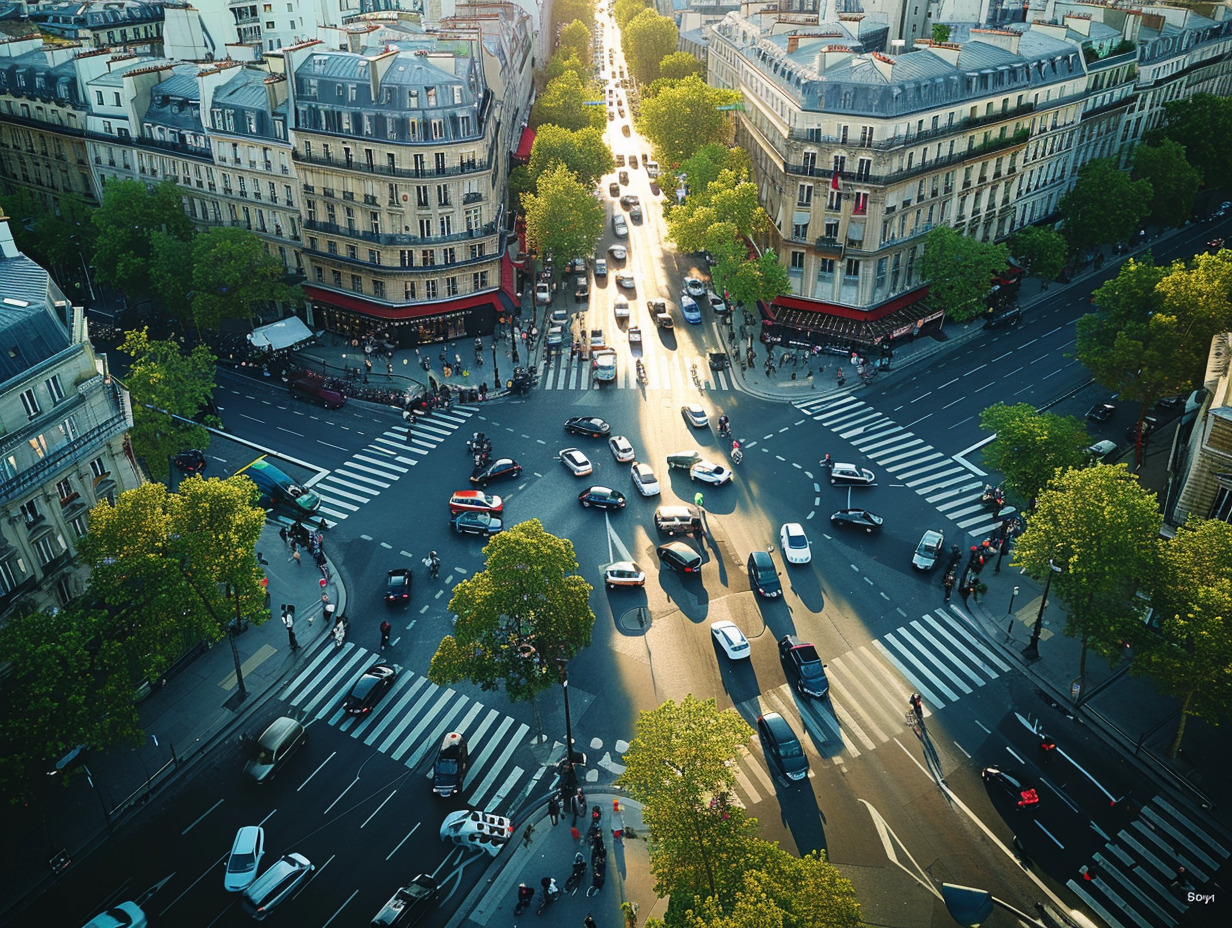
Paris positions itself as a pioneer of ecological initiatives for more sustainable urban mobility. Local authorities and businesses have taken up the traffic issue, working together to propose innovative solutions. The organization InTerLUD supports these efforts by collaborating with local authorities to rethink urban logistics.
Strengthening Transport Infrastructure
The Grand Paris Express expands the metro network with new lines 15, 16, 17, and 18, thus facilitating travel in the suburbs. Line 14, for its part, is being extended to better serve under-equipped areas. The RER E, trams, and TZEN lines complete this network, offering alternatives to individual vehicles.
- Vélib’: self-service bike service available throughout the capital.
- Autolib’: electric car-sharing service, a pioneer in its field.
Shared Mobility and Soft Alternatives
Shared mobility is developing, with solutions like carpooling and self-service vehicles. These options reduce the number of cars on the road and promote a more rational use of resources. The success of electric scooters and bike lanes reflects Parisians’ acceptance of these new mobility solutions.
The Île-de-France Mobilités initiative manages this entire network, ensuring maximum coherence and efficiency. Figures like Laurence Debrincat and Caroline Lemoine bring their expertise to optimize these infrastructures, in line with the goals of sustainable mobility.
These collective efforts show that Paris is not only ready to adopt new technologies but also to completely rethink its model of urban mobility to meet the environmental and social challenges of our time.