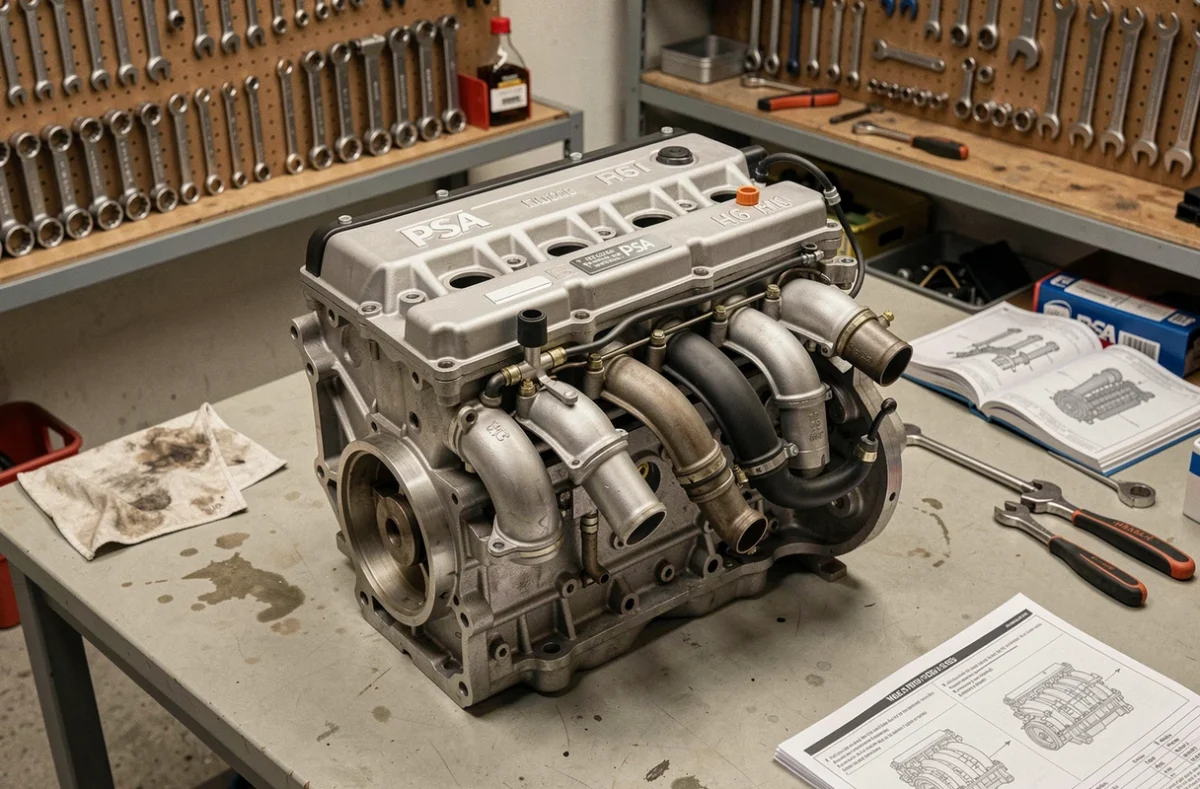
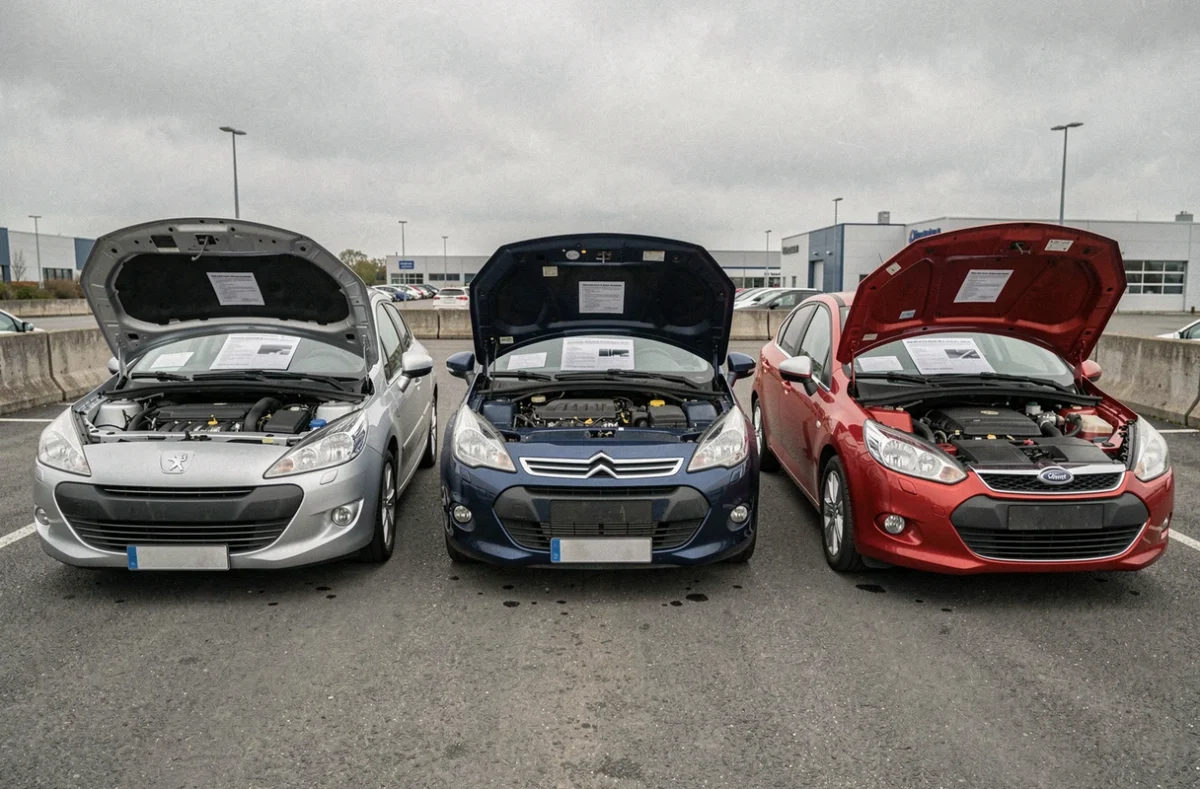
The 1.6 HDi engine used by PSA and its Ford counterpart, the 1.6 TDCi, share a common foundation: the DV6 family, co-developed by the two groups in the early 2000s. This technical relationship has powered dozens of Peugeot, Citroën and Ford models, from the Partner to the C-Max, as well as the 308 and Focus.
The question of compatibility between these engines comes up regularly on forums and among mechanics, particularly when replacing an engine or buying spare parts. The commercial names, 1.6 HDi and 1.6 TDCi, suggest that the engines are easily interchangeable. The technical reality is more complex.
DV6 family: why the engine code matters more than the commercial name
Simply referring to a “1.6 HDi” or “1.6 TDCi” is not enough to establish compatibility. These names refer to an entire family, the DV6, which has gone through several generations and internal configurations. Two engines with the same commercial name may differ in their cylinder head, turbocharger, injectors or emissions-control system.
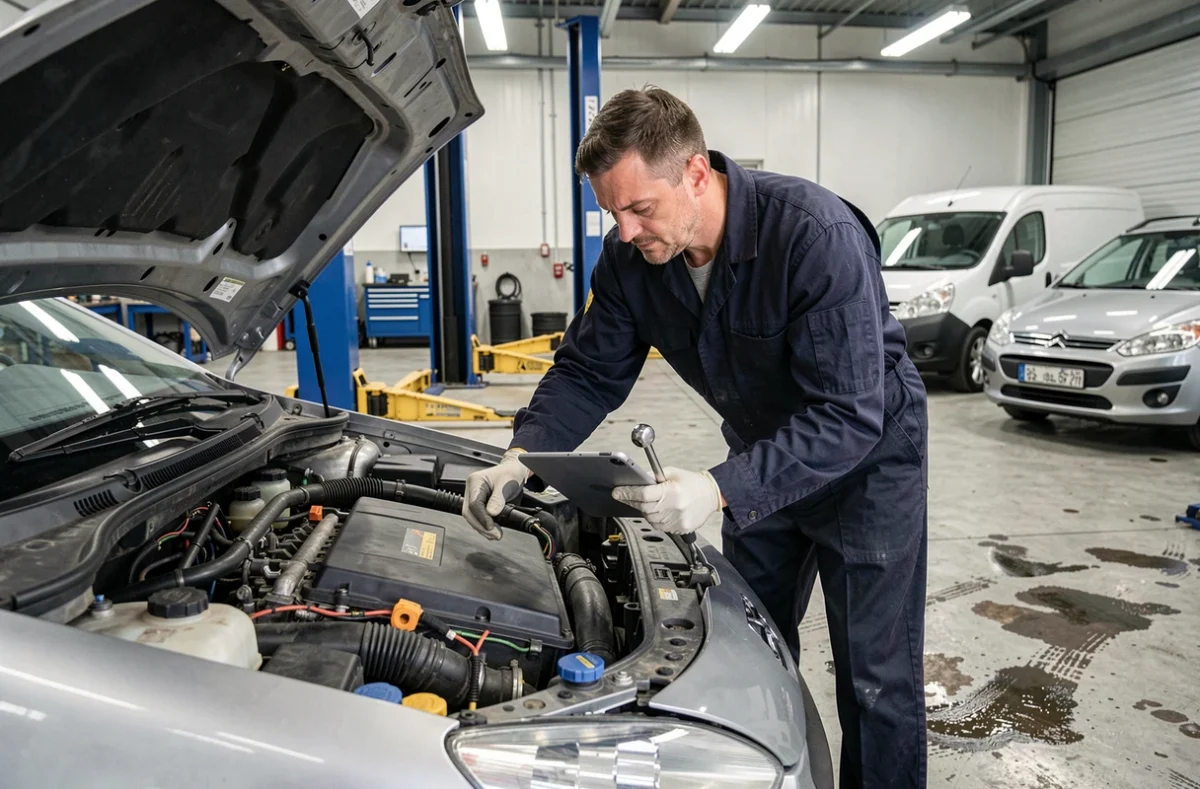
The reliable way to identify an engine precisely is by the engine code stamped on the block (9HX, 9HZ, 9HP, TZJA, etc.). This code identifies the generation, number of valves and emissions standard. A guide detailing compatibility between PSA and Ford DV6 engines can help you cross-check these references before making a purchase.
For a spare part or replacement engine, checking the vehicle’s VIN in a manufacturer’s parts catalogue is still the safest method. Compatibility claims based on make and engine capacity on online parts websites are often misleading.
DV6 generations: 16-valve, 8-valve and BlueHDi
The DV6 family can be divided into at least three major technical generations, and this segmentation is what makes swapping engines between PSA and Ford vehicles more complicated.
16-valve versions (Euro 3 and Euro 4)
The first 1.6 HDi/TDCi versions use a 16-valve cylinder head. They can be found in models such as the Peugeot 307, first-generation Citroën C4 and Ford Focus II. Depending on the variant, output is around 90 or 110 hp. These engines share a very similar architecture across PSA and Ford, which has fuelled the idea that they are fully interchangeable.
Transition to 8 valves (Euro 5, around 2010)
From around 2010, PSA and Ford adopted an 8-valve cylinder head for Euro 5 versions. Output is around 92/95 hp or 112/115 hp. This change to the cylinder head affects injector geometry, engine mapping and sometimes the turbocharger. A 16-valve engine and an 8-valve engine are therefore not interchangeable, even if they have the same displacement and similar power outputs.
BlueHDi and SCR (Euro 6)
The latest versions, sold under the BlueHDi name by PSA, add an SCR system with AdBlue injection alongside the particulate filter. This additional emissions-control equipment requires dedicated wiring, a compatible control unit and an AdBlue tank. Installing a BlueHDi engine in a vehicle originally fitted with a DV6 Euro 4 engine without SCR would require extensive modifications, far beyond a straightforward mechanical swap.
Emissions-control components and electronics: the real obstacles
The core mechanical components (block, crankshaft and pistons) are often similar across generations within the DV6 family. Compatibility issues tend to centre on two less visible but crucial areas.
- The particulate filter (DPF) differs between versions. Some PSA variants use an additive (Eolys) injected into the fuel to lower the DPF regeneration temperature, whereas other versions and most Ford models operate without an additive. The type of DPF, its position in the exhaust system and the way regeneration is managed therefore vary from one vehicle to another.
- The engine control unit (ECU) is calibrated for a specific engine code, emissions standard and vehicle. Transplanting a DV6 engine from a Citroën C4 to a Ford C-Max, for example, will not work without reprogramming or replacing the control unit, because communication protocols with the rest of the onboard electronics (BSI in PSA vehicles, BCM in Ford vehicles) differ.
- The turbocharger may vary in size and variable-geometry design depending on the target power output. A turbo designed for a 90 hp version does not deliver the same boost pressure as one for a 115 hp version, even if the engine block is identical.
These three factors explain why swapping an engine between brands requires checking each component individually, not just matching engine displacement.
Swapping a 1.6 HDi for a TDCi: what to check before buying
Replacing a Ford 1.6 TDCi with a Peugeot or Citroën 1.6 HDi (or vice versa) is technically possible in some cases, provided you methodically compare several components.
- The exact engine codes of both blocks (the one being replaced and the replacement): they must belong to the same generation and have the same type of cylinder head (8 or 16 valves).
- The emissions standard: a Euro 4 engine cannot replace a Euro 5 engine without adapting the emissions-control system and control unit.
- The ancillary components: high-pressure pump, injectors, turbocharger and engine wiring harness. These components may differ even between closely related engine codes.
- Verification using the recipient vehicle’s VIN in a manufacturer’s parts catalogue or a diagnostic tool such as Diagbox (PSA) or IDS (Ford).
The stated power output does not guarantee interchangeability. Two 112 hp engines may have completely different injectors, turbochargers and control units if one is a 16-valve Euro 4 engine and the other an 8-valve Euro 5 engine.
When buying a used engine, asking for the complete reference stamped on the block and comparing it with the original engine’s reference is the only reliable way to avoid an incompatible installation. The timing tools specific to PSA/Ford timing systems (pin-based timing) are also shared by both brands, confirming their mechanical relationship without, however, proving electronic or emissions-system compatibility.