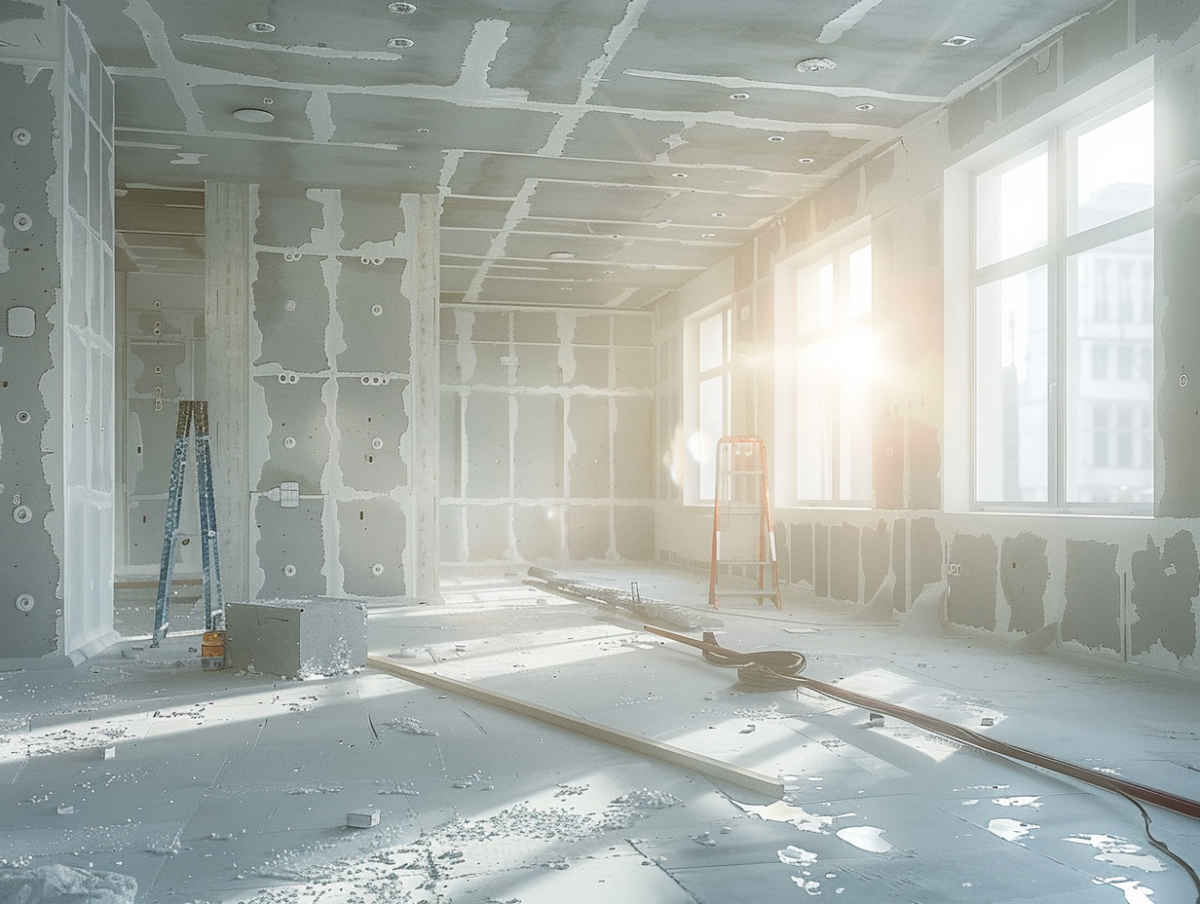
Installing drywall may seem like a simple task, but frequent mistakes can occur, compromising the quality of the final result. For example, improper cutting of the panels can lead to gaps between the joints, making finishing difficult. To avoid this, be sure to measure accurately and use a sharp cutter.
Another recurring issue is the lack of surface preparation. If the supports are not perfectly clean and dry, the panels may come loose over time. Thorough cleaning and the application of a suitable primer ensure better adhesion.
Common mistakes when installing drywall
One of the frequent mistakes is the incorrect fastening of the drywall panels. Using inappropriate screws or spacing them irregularly can weaken the installation. Make sure to use screws specifically designed for drywall and place them every 30 cm along the metal studs or wooden framework.
Joint issues
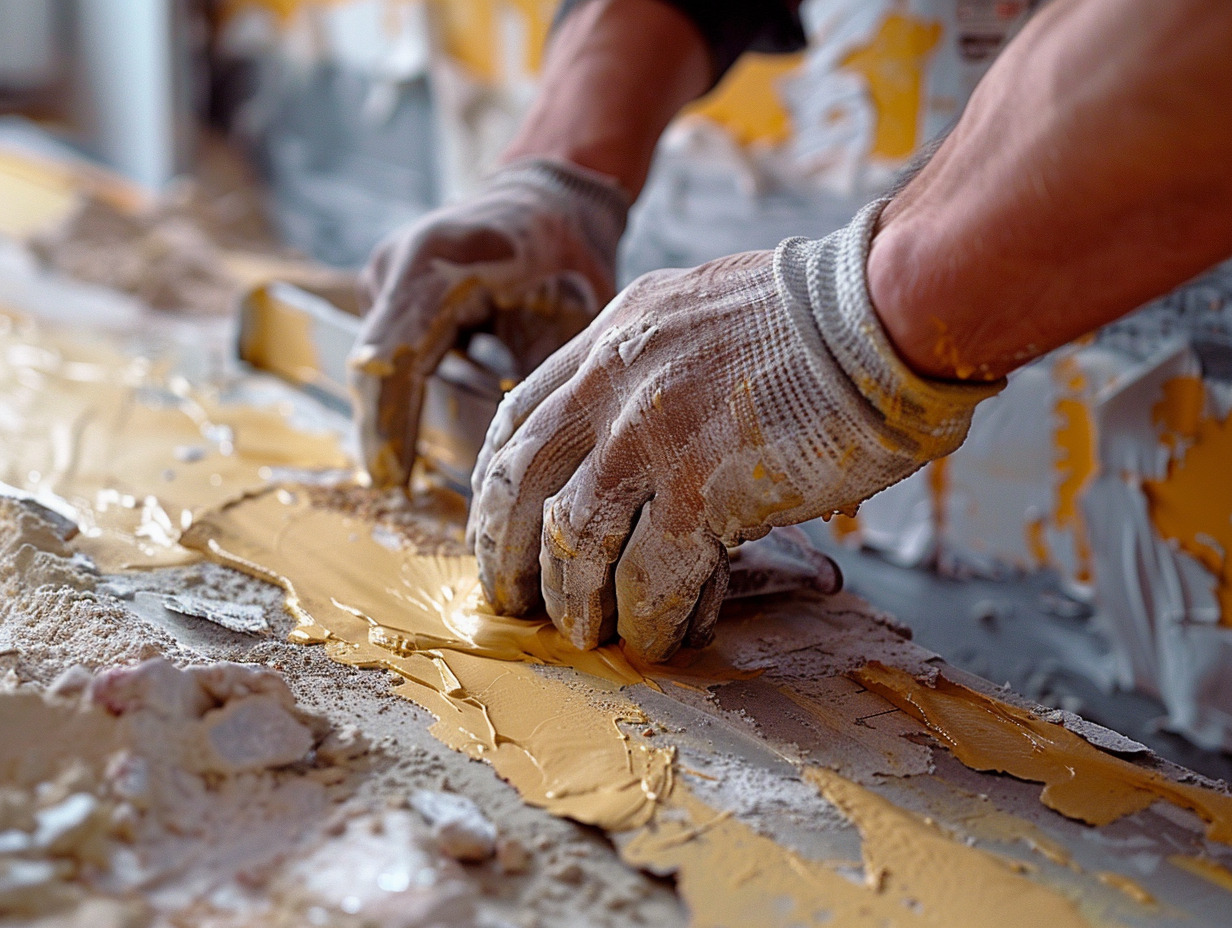
Making the joints between the panels is a delicate step. A poorly made drywall joint can cause visible cracks after painting. To avoid this:
- Use a quality joint tape.
- Apply a suitable compound in several thin layers.
- Allow sufficient drying time between layers.
Surface preparation
Surface preparation is often overlooked. If the surfaces are not perfectly clean and dry, the panels may come loose over time. Thorough cleaning and the application of a suitable primer ensure better adhesion.
Moisture and mold
In humid rooms like the bathroom or kitchen, using moisture-resistant panels is essential to avoid mold problems. Be sure to properly ventilate the room to limit residual humidity.
Following these guidelines helps avoid common mistakes when installing drywall and ensures a durable and aesthetic installation.
Solutions to correct drywall installation errors
The first step to correcting a faulty installation is to identify the specific errors. Once diagnosed, appropriate solutions can be implemented for each type of problem.
Fastening the panels
If the screws used are inadequate or poorly positioned, it is necessary to remove them and replace them with suitable screws, spaced regularly every 30 cm on the studs. Also, check the alignment of the drywall panels to avoid any future misalignment.
Correcting joints
For poorly made joints, follow these steps:
- Remove the faulty joint tape.
- Clean the surface and apply a new compound in thin layers.
- Use quality tape and allow to dry between each layer.
Respecting the drying time is essential to ensure the durability of the joints.
Surface preparation
Poorly prepared surfaces can lead to peeling. Carefully clean the surfaces and apply a suitable primer. This step ensures better adhesion of the drywall panels.
Moisture management
In humid rooms, such as the bathroom or kitchen, use moisture-resistant panels. To correct an existing installation, replace standard panels with moisture-resistant ones and improve the room’s ventilation. This prevents mold and increases the durability of the work.
Insulation and finishes
To improve thermal and acoustic insulation, consider adding rock wool or expanded polystyrene behind the drywall panels. Use quality finishes for an optimal aesthetic result.
Following these corrections ensures a durable and professional drywall installation.