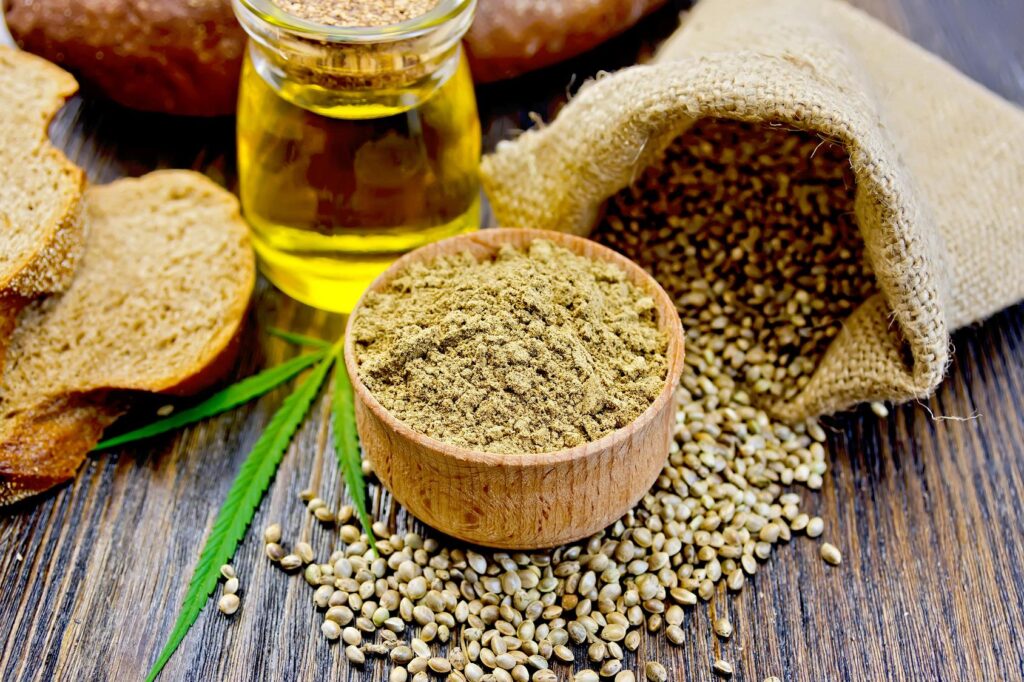
If I say the word “hemp,” what comes to mind? Someone might think of fibers for making ropes, someone else about marijuana joints. However, the world of hemp doesn’t stop there: this plant can also be used in cooking. Don’t do that, don’t open your eyes. First, let’s clarify that food products derived from hemp have nothing to do with drugs; on the contrary: the seeds, oil, and flour derived from this plant are a very rich source of proteins, antioxidants, essential fatty acids, vitamins, and minerals valuable for our health. What are their properties and their thousand uses? We asked Dr. Valentina Fratoni, a biologist specialized in nutrition (you can request a consultation with her here). A researcher at the University of Florence, she collaborates as a nutritionist in the Department of Metabolic Bone Diseases at the CTO of Florence.
-
What is hemp and how is it used?
Hemp is a herbaceous plant that has always accompanied the path of our civilization. It has had many applications in the production of fibers for ropes, fabrics, building materials, as insulation against water, in the production of paper and watermark for banknotes and cosmetics. The flowers have had wide applications as medicine or for mystical rites. The oil extracted from the seeds has long been used for food purposes, but also for lighting and the preparation of solvents. In the past, hemp cultivation was common in Mediterranean and Central European regions, but it was only later that it reached America. The crops then underwent a sudden halt following the “Marijuana Tax Act,” the law that banned hemp in the United States in 1937 and, consequently, in much of the rest of the world.
-
Which parts of the plant can be used for food purposes?
Highly nutritious seeds rich in easily digestible proteins are used. Their use is somewhat widespread around the world: grinding produces flours that can be used for making pasta, biscuits, beer, candies, etc. From pressing the seeds, hemp oil is also obtained: once used almost exclusively as fuel, it has since been discovered to be edible and extremely virtuous from a nutritional standpoint, as it is rich in essential fatty acids and antioxidant vitamins beneficial for artery health.
-
It’s called hemp, and people immediately think of joints and drugs: if you eat these food products, do you risk anything? Can you get high?
No, there is no risk, as the psychotropic effect related to cannabis consumption is determined by the molecule D9-tetrahydrocannabinol (THC), which is not present in hemp seeds intended for food use.
-
What are the benefits of hemp? Is it suitable for all ages?
Hemp-based foods should be considered true nutraceuticals, that is, functional foods capable of improving an individual’s health status. When included in a good diet, they are suitable not only for healthy adults but also for children and the elderly. These products are indeed rich in essential fatty acids (such as omega-3 and omega-6, which have an anti-inflammatory effect beneficial for cardiovascular and skin health), but also in proteins (with all essential amino acids in optimal amounts and in an easily assimilable form), minerals, vitamins, and fibers.
-
How to use hemp seeds in cooking?
Hemp seeds can be sourced from special approved seeds of food-grade hemp sativa. They can be consumed raw, to be added to salads, fruit salads, smoothies, and muesli, or they can be used in decorating desserts, in the preparation of bread, grissini, or other hot dishes, keeping in mind that their nutritional value is only maintained intact when they are raw.
-
Hemp oil is obtained from pressing the seeds: how should it be consumed?
Hemp oil has a pleasant smell and taste: for this reason, it can be used cold as a dressing for salads, pasta, fish, or it can be used daily on-site or as a supplement to other vegetable oils. What makes this oil high quality is the raw material, namely the seeds, preferably organic and cold-pressed. Subsequently, the product should be stored in a cool, dark environment to avoid oxidation and rancidity. Regarding doses, it can be said that a healthy person can take up to 10-15 ml (about 2 tablespoons) of hemp oil per day, thus complementing the daily dose of olive fat.
-
Can hemp flour replace regular white flour in cooking? Is it suitable for celiacs?
The uses of hemp flour in cooking are varied. We can add it to other types of flours, whether whole or common 00, to make biscuits, crackers, grissini, sponge cakes, pies, cakes, focaccia, and especially excellent homemade bread. Moreover, these flours, being gluten-free but at the same time very “binding,” can find utility in the industrial preparation of products for celiac disease.
-
Is it true that hemp flour is considered a “nutritional vaccine”? What does that mean?
It is defined this way because it is a natural food capable of inducing the production of protective antibodies by the body. Introduced into the daily diet, it can strengthen and regulate the immune system’s response, the hormonal system, and the nervous system to environmental aggressions. It is also a valid anti-inflammatory remedy for treating many chronic degenerative diseases.
YOU MIGHT ALSO BE INTERESTED IN:
Soy: benefits and virtues
The twenty most powerful foods for our defenses
Green tea, properties and benefits
Chicken, nuts, and vegetables: this is what lean people eat
Tag: More info on CBD